
Buying sensory room equipment is easy to get wrong. The catalogs are long, the prices vary a lot, and a room that looks great in a photo can be loud, cluttered or hard to supervise in real life. This guide covers what a sensory room is and what sensory room equipment is worth buying first, the seven pieces most rooms are built around, and how to choose between them. It is written for schools, clinics and the resellers who supply them.
What is a sensory room?
A sensory room is a dedicated space where light, sound, touch and movement are controlled on purpose. Children and adults go there to calm down, focus, or explore at their own pace. The idea traces back to Dutch care settings in the 1970s, where the approach became known as Snoezelen. Today the term covers everything from a fully fitted therapy suite to a padded corner in a classroom.
The room does not treat anything by itself. It gives a child with sensory processing differences, or a child who is simply overwhelmed, a place where the input is gentler and easier to predict. If you want the background science, sensory processing is a good starting point.
Who uses sensory rooms
Sensory rooms in schools are the biggest group. Special schools have used them for years, and mainstream schools now add a small calm room so a child can reset between lessons. Clinics and therapy practices use them for sessions with occupational therapists. Care homes, hospitals and early learning centers use them as well. At home, parents usually start with one corner and add pieces over time.
That mix matters when you buy. A school wants durable, wipe-clean sensory room equipment that survives daily use. A clinic wants flexibility. A family wants something that fits a bedroom. The same bubble tube can serve all three, but the size, the power plug and the mounting will not be the same.

The 7 essentials of sensory room equipment
Most sensory room equipment lists come down to the same seven building blocks. You do not need all of them. Pick three or four that match the room’s job, then add more when the budget allows.
1. A swing or hammock
Movement is the item people ask about first. A stretch hammock gives gentle, even pressure and lets a child rock slowly or curl up. Check the ceiling before you order, because a swing is only as safe as its fixing point. Our sensory swing for kids comes with a swing plate or round disc hardware, and the sensory hammock swing is the lower-cost option with a rotating hook.

2. A bubble tube
A bubble tube is the visual centerpiece of many rooms. Slow bubbles and shifting color give children something to track, and it works well in a quiet corner. For bubble tubes for sensory rooms, taller and wider tubes (20 to 25 cm across) make a stronger focal point, while a slim 90 to 120 cm lamp suits a bedroom or a small clinic. See the sensory bubble tube range, or the smaller bubble tube lamp with fish.

3. Wall panels and boards
Wall panels use vertical space and keep the floor clear. Tactile boards, flip sequin panels and light-up pegboards suit different ages. Sequin panels are quiet and need no power. Light panels add visual input. Browse our sensory wall panels, including the hexagon wall boards that you can join into a wall. If you want a ready-made light-up option for a single wall, the 60 x 60 cm light-up sensory wall panel from MoniBabu has 175 pegs, a 16-color remote and USB power, and it hangs in about ten minutes.
4. Floor tiles and mats
Liquid floor tiles move under hands and feet, which holds attention well. Soft mats define the space and protect knees. Wipe-clean surfaces matter in any shared room. More options are in our sensory mats category.
5. Mirrors and light features
An LED mirror creates depth that a flat light panel cannot. A LED infinity mirror gives a group something shared to look at, and teachers can set a slow color fade for transitions.
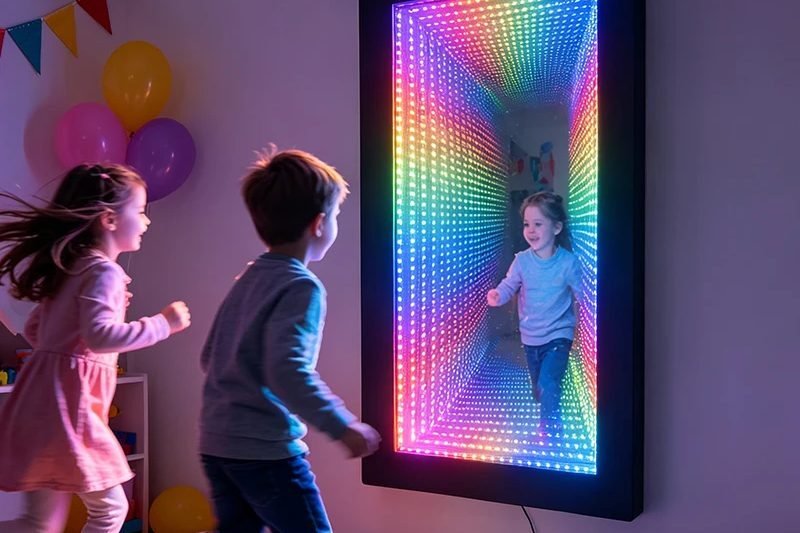
6. Interactive modules for sensory room equipment lists
Switch panels, light and sound boxes and game panels teach cause and effect. They suit children who want to press something and see a result. Many suppliers sell them one by one, so you can build a room module by module.
7. Soft seating and a calm-down space
This is the piece most budgets skip, and it is the one staff notice first when it is missing. A beanbag, floor cushion or small padded nook gives a child somewhere to sit once the stimulation has done its job.
Choosing sensory room equipment by space and budget
Good sensory room layouts start with the space you actually have, not the sensory room equipment list. As a rough planning guide, a bubble tube, one wall panel and a swing fit in a room of about 8 to 12 square meters (90 to 130 square feet). Smaller than that, choose either the swing or the tube, not both.
- A corner (under 4 m²): one bubble lamp or light panel, floor tiles and a cushion. Low cost, quick to set up and easy to put away.
- A small room (6 to 10 m²): a bubble tube, a wall panel, floor tiles and a ceiling-hung hammock. This is the most common school setup.
- A full room (12 m² or more): add an infinity mirror, interactive modules, padded walls and a ball pit. At this size, plan the layout on paper first. Our turnkey sensory room kits are quoted to the room size.
One mild opinion: buy fewer items and put more money into the floor and the lighting control. A room with three well-chosen pieces beats one with twelve that all flash at once.
For a zone-by-zone plan with three budget tiers and the safety rules, read our sensory room ideas guide.
Calming setups for an autism sensory room
An autism sensory room uses much the same equipment list. What changes is the priority order. Children on the autism spectrum often react strongly to noise, flicker and sudden changes, so the aim is control and predictability. Every child is different, so involve the child’s occupational therapist where you can.
- Choose lights with a remote or dimmer, so an adult can set a slow, steady color.
- Prefer quiet items first: bubble tubes, sequin panels and liquid tiles make no noise.
- Keep the walls and floor in soft, plain colors, and put the equipment on one side so there is a clear path in and out.
- Add a place to sit with a view of the door, because many children relax more when they can see who comes in.
- Let the child choose, and keep sessions short at first.
If you are planning this type of room, read the notes on sensory room kits and ask us which items have the quietest operation. For routines and toy choices, see the toys by age and stage section of our guide.
Safety and installation checks for sensory room equipment
Whatever sensory room equipment you buy, check these before the first session (our weekly care routine covers the ongoing checks, and you can print our free sensory room safety checklist):
- Ceiling and wall fixings. Swings and heavy wall panels need a structural check and the right anchors for your wall type. Do not rely on a single screw in drywall.
- Load ratings. Get the rated load of a swing in writing, and never exceed it.
- Power. Confirm the voltage and plug type for your country, and keep cables out of reach.
- Small parts. Sequins, rods and beads can be a mouthing risk for very young children. Check the age grading.
- Test reports. Ask for the reports that apply to your market, such as CPSIA, ASTM F963, EN 71 or CE. Buyers in schools and clinics are often asked for them in procurement.
- Cleaning. Pick surfaces you can wipe, and write a simple cleaning routine for staff.
Buying sensory room equipment wholesale
If you resell sensory room equipment, the economics change. You want a supplier who can mix products in one order, brand the goods and ship in a way your forwarder can plan. We are partnered with verified manufacturers and negotiate for the lowest factory price on each order, so you get one contact instead of five. You can read more about our wholesale and OEM program or who we are. The usual process is simple: send us your product list and quantities, review the quote, approve a sample, then production and inspection before shipping.
Start with the sensory room equipment categories that sell most: sensory swings and bubble tubes. Then request a quote with your destination country, and we reply within one business day.
Questions buyers ask
How much does a sensory room cost?
It depends on the size and the items. A corner with a lamp, tiles and a cushion costs a fraction of a fully padded room with a mirror and interactive panels. Send us the room size and a rough budget and we suggest a sensory room equipment list.
Do sensory rooms work?
Many schools and therapists report that children use them to calm down and refocus. Results differ for every child, and a room is a tool to use alongside professional guidance, not a treatment on its own.
Can I build one in a small space?
Yes. A single corner of sensory room equipment can work well. Choose one focal point, a soft floor and good lighting control.
What is the best first piece of sensory room equipment?
Most buyers start with a bubble tube or a swing, then add floor tiles and a wall panel. If you are unsure, start with the quiet items.
Ready to price your sensory room equipment? Send us your list or message us on WhatsApp.